
Running a Sex Offender Check in Middlesex County
The Connecticut Sex Offender Registry is the main public source for Middlesex County. DESPP and Connecticut State Police administer it. There is no county sheriff list to search and no Middlesex sheriff counter where registrants report. State Police and local law enforcement carry out the Connecticut functions that county sheriffs handle elsewhere.
Begin with a name when checking a known person. For community awareness, use a Middlesex town such as Middletown, Cromwell, or Clinton, or search by ZIP code. Match aliases, physical details, offense data, and status rather than relying on a name alone. Information can change, and an address is described as last known. Call local police or State Police about a suspected registration violation, and call 911 only for an emergency.
No Middlesex Sheriff Registry Counter
Connecticut abolished county sheriffs, so Middlesex County does not maintain a local registration office, independent map, or verification calendar. The DESPP Sex Offender Registry Unit is at 1111 Country Club Road, Middletown, CT 06457. Its published phone is 860-685-8060, fax is 860-772-1730, and email is SORU@ct.gov. That state office is physically in Middlesex County but serves Connecticut, not a county government.
DESPP Sex Offender Registry Unit
1111 Country Club Road
Middletown, CT 06457
860-685-8060
SORU@ct.gov
Local departments remain important for public-safety reports. They can receive information about suspected noncompliance within their jurisdiction. They do not replace the state registry or create a separate county risk list.
Searching the Connecticut Sex Offender Registry
The official registry is free and does not require a requester to identify themselves. Search choices support both a specific-person check and a town-level review. Spelling matters, so repeat a search for known aliases or variants.
- Open the official Connecticut registry and read its conditions and warnings.
- Enter a last name, add a first name when useful, or choose a town or ZIP code.
- Review the result list and compare aliases and physical details before selecting a profile.
- Open the profile and read the offense, address, registration, and compliance fields in context.
| Field or control | Type | Required | Notes |
|---|---|---|---|
| Last Name | Text | No | Spelling and aliases matter |
| First Name | Text | No | Narrows name results |
| Town or City | Dropdown or text | No | Choose a Middlesex municipality |
| ZIP Code | Text | No | Geographic search option |
| View Entire List | Link or control | No | Browse without a named search |
| Search and Reset | Buttons | Not applicable | Run or clear criteria |
Do not infer that a blank search means no duty exists. Check spelling, aliases, nearby towns, and the registry's current interface. Restricted information and records outside Connecticut require different lawful channels.
Middlesex Registry Addresses Are Last Known
A public profile's residence is a last known address, not a promise that the person is physically there. Moves, reporting cycles, processing, custody, and suspected noncompliance can affect what appears. Never use an address to confront a registrant, enter property, or follow household members.
Compare the profile's status and update details with the address field. If the information suggests a genuine registration problem, preserve the public details and contact the police department serving that town or Connecticut State Police. Provide facts, not conclusions. Emergency conduct belongs with 911; a routine suspected records mismatch does not.
This limit also matters when reading work, school, or vehicle information that the law permits the registry to publish. The profile is a statutory notice record. It is not continuous surveillance and cannot establish a person's present location at a given hour.
What a Registry Profile Shows
Connecticut publishes the fields Chapter 969 permits. The exact interface can change, and not every profile will contain every type of information. A careful Middlesex County check uses several identity points and reads the offense details without assigning a risk score the state does not publish.
| Name and Aliases | Published identity names used to distinguish and locate a record. |
|---|---|
| Photo and Description | Photograph, sex, race, height, weight, hair, eyes, and identifying marks as allowed. |
| Last Known Residence | The reported address, which is not a guarantee of present location. |
| Work, School, or Vehicle | Related details when collected and authorized for public display. |
| Offense Information | Description, statute, conviction or release dates, and victim-age category where authorized. |
| Registration Status | Registration or compliance information shown by the current state system. |
| Category | Offense-based statutory duty, not a public Level 1, 2, or 3 dangerousness score. |
The registry itself does not determine that a listed person is currently dangerous. That disclaimer is central to a fair reading. A profile describes a legal registration record, not how a reader should judge future behavior.
Middlesex Searches Across State Lines
The National Sex Offender Public Website gives a federal search layer across participating jurisdictions. It is useful when a name may connect to more than Connecticut or when a person recently crossed a state line. It does not replace the Connecticut registry for a Middlesex town search.
| Search layer | Strongest use | Middlesex limitation |
|---|---|---|
| Connecticut Registry | Name, town, ZIP, and Connecticut profile detail | State statutory data only |
| NSOPW | Name search across participating jurisdictions | Connecticut does not provide geographic coordinates to the federal system |
Because Connecticut does not supply coordinates to NSOPW, do not assume its address-radius or map result is complete for Middlesex County. Use the Connecticut town or ZIP route for local geography and NSOPW's name search for the interstate layer.
Registration Requirements and Levels in Connecticut
Connecticut uses offense-based duties under General Statutes §§54-250 through 54-261. It does not publish a simple Level 1, Level 2, and Level 3 risk scheme for readers to apply. The statute commonly assigns ten-year registration to specified offenses and lifetime registration to sexually violent and other designated categories. Verification duties follow the statutory category.
| Connecticut category | General duration | Public access |
|---|---|---|
| Criminal offense against a minor or designated nonviolent sexual offense | Generally 10 years | Published as Chapter 969 directs |
| Sexually violent offense | Lifetime | Ongoing statutory verification |
| Repeat or designated lifetime category | Lifetime | Offense-based category, not a reader-created score |
| Court-granted §54-255 relief | As ordered | Limited eligibility controlled by the court |
Federal SORNA tiers do not map neatly onto these Connecticut categories. Connecticut has stated that it is not fully SORNA-compliant. Use the state statute and profile wording instead of translating a record into an unofficial tier.
Middlesex Registry Court Exemptions
Connecticut General Statutes §54-255 allows a court exemption only in limited qualifying circumstances. It is not a broad request available whenever registration is difficult or a long period has passed. The court controls eligibility and the terms of any relief.
A public searcher should not forecast whether someone will receive relief. Read the current registry and court order as they stand. If a public profile changes after relief, the update reflects a legal decision, not missing data that a town police department should recreate.
Likewise, Connecticut's ten-year and lifetime categories describe registration duties. They do not invite the public to build a private scale of dangerousness. The state's own disclaimer rejects that inference.
Middlesex Registry Email Notices
DESPP advertises free email notification connected to the registry. Use the current official state service page to enroll and confirm what events or geographic criteria the service supports at that time. An alert supplements a fresh registry search; it does not turn an address into a live location.
Email also has practical limits. Delivery can be delayed, messages can be filtered, and a subscriber's chosen criteria may not capture every relevant update. For immediate safety concerns, contact law enforcement instead of waiting for an alert. For routine community awareness, pair notifications with the official Connecticut registry and the national name-search layer.
No Middlesex sheriff app or county notification list was found. The state-managed system is the correct public subscription route.
Reporting Middlesex Registry Noncompliance
A suspected reporting violation should go to the police agency with local jurisdiction or Connecticut State Police. Share the profile, observed facts, date, place, and reason for concern. Do not investigate by confrontation. State and local officers can determine whether the matter is a delayed update, lawful status, custody change, or possible violation.
The official Clinton Police Department page shows a local Middlesex law-enforcement contact.
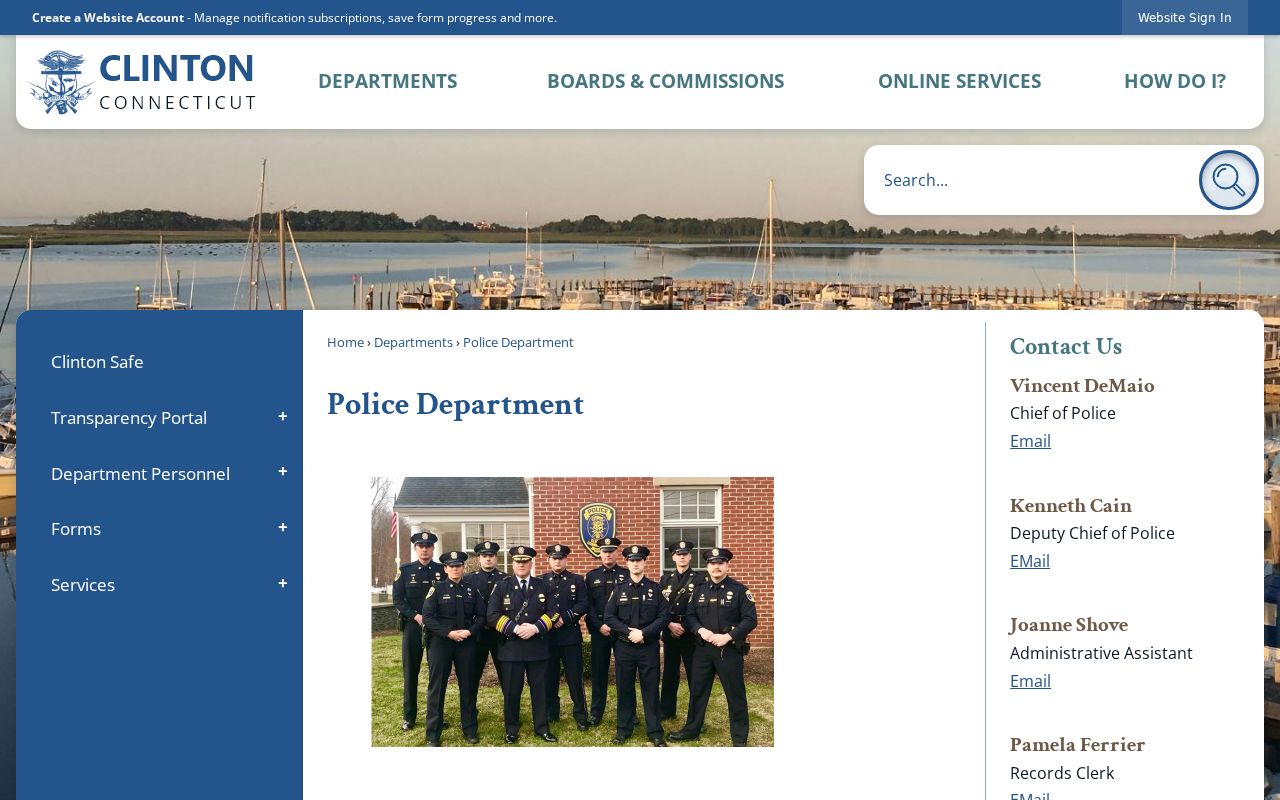
For a suspected issue within Clinton, that department is a proper local reporting route, while DESPP remains the registry administrator.
The Clinton records request source is pictured below.
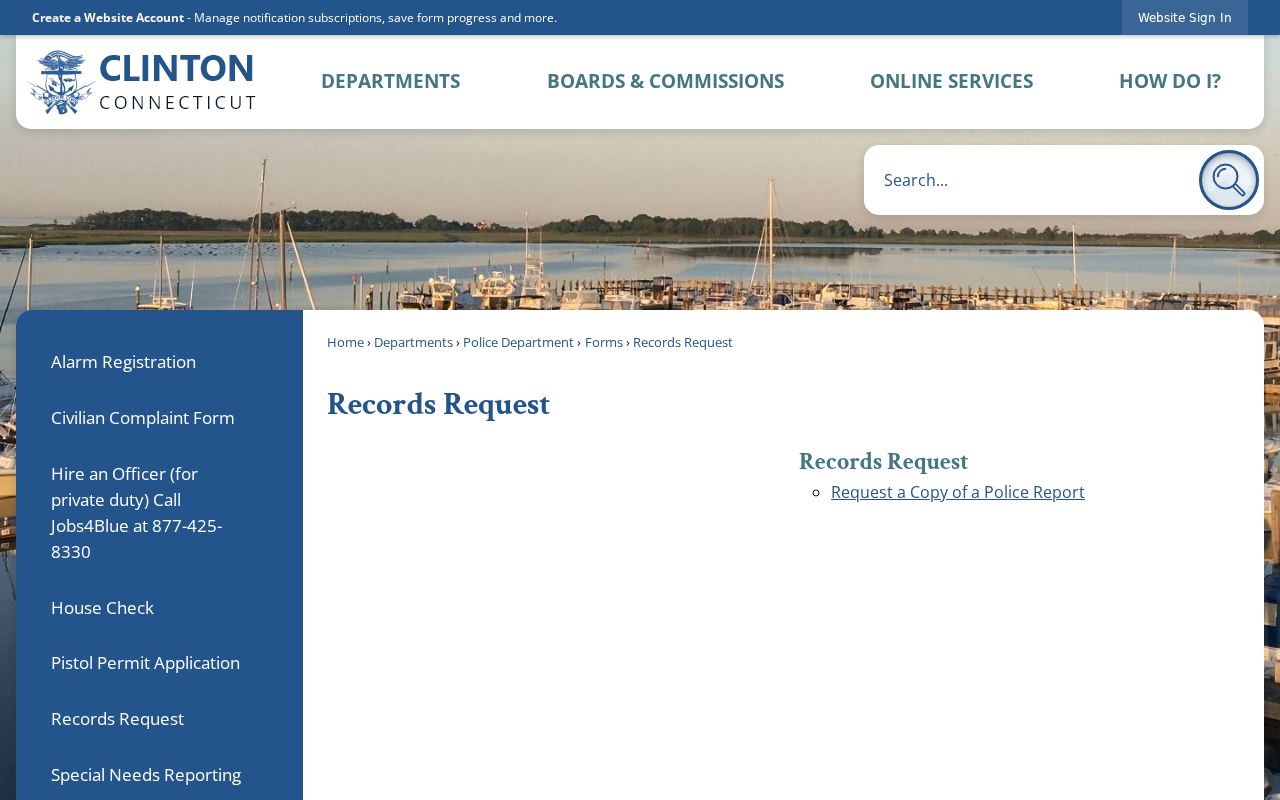
A public records request is distinct from reporting urgent conduct. Use the police contact for safety or suspected noncompliance and the records process only for an appropriate disclosable record.
Lawful Use and Community Notification
Registry information supports personal safety and community awareness. Read profiles in context, verify identity, respect the last-known-address limit, and report concerns through officials. Connecticut's publication of a record does not authorize threats, harassment, trespass, vigilantism, or discrimination.
Use registry information lawfully: Misuse, including harassment, threats, or intimidation, can violate Connecticut law. Chapter 969 controls the registry and its public-use limits.
Do not contact household members or neighbors to test a profile. Do not republish personal data as a warning campaign. DESPP and police have authority to verify compliance. A reader's role is to use the official information for awareness and give suspected violations to the right agency.
Connecticut's registry warning and General Statutes Chapter 969 supply the governing terms. Those official sources should control whenever interface text or legal duties change.