
Criminal Cases in Middlesex County Courts
Adult felonies and misdemeanors from Middlesex County go to Connecticut Superior Court. There is no Middlesex county criminal court and no municipal criminal docket. The courthouse in Middletown contains both Middlesex Judicial District Part A and Middletown GA 9, also called Part B. Part A chiefly handles the most serious Class A and B felony work. GA 9 chiefly handles Class C, D, and E felonies, misdemeanors, infractions, and motor-vehicle cases. Both can appear in the statewide lookup.
The Division of Criminal Justice splits prosecution along the same lines. The Middlesex Part A prosecutor's office and GA 9 office operate at the courthouse, while the Superior Court clerk remains custodian of filed public case material. A police arrest number is not the court docket number. Once prosecutors file or revise charges, the docket becomes the best route for following the judicial case.
Middlesex Criminal Clerk at Court Street
The Middlesex Judicial District clerk's public counter is at 1 Court Street, Middletown, CT 06457-3374. The public-information line is 860-343-6400, the general fax is 860-343-6423, and the criminal fax is 860-343-6566. The building opened in 2000 and consolidated court functions once divided among older facilities. That history explains why a modern Middlesex County court-file request belongs at one state courthouse rather than at a county clerk's office.
Middlesex Superior Court Clerk
1 Court Street
Middletown, CT 06457-3374
860-343-6400
Ask about public criminal files, nonposted documents, certified outcomes, and archived-file routing.
The Judicial Branch directory is the source to check before a visit because staff, access rules, and courthouse conditions can change. Judicial Marshals screen visitors but do not act as county sheriffs or maintain criminal histories.
How to Search Middlesex Case Records
Use both the pending defendant search and the disposed defendant search. A matter can move from one side to the other, and data reflects entry through the prior business day. Search former names and spelling variants separately.
- Search the pending-case page with the defendant's last and first names.
- Repeat the search on the disposed-case page.
- Add birth year, then try both Middlesex JD and Middletown GA9.
- Open the result, note the full docket number, and read each count on its own.
- Call the clerk for a pleading, certified disposition, or record not posted online.
| Field label | Type | Required | Use |
|---|---|---|---|
| Last Name | Text | Yes | Disposed search uses “begins with” |
| First Name or Initial | Text | No | Narrows common surnames |
| Birth Year | Four digits | No | Helps separate similar names |
| Court Location | Dropdown | No | Try Middlesex JD and Middletown GA9 |
| Category | Dropdown | No | Criminal or Motor Vehicle |
| Docket Number | Text | Alternative | Use the exact format when known |
Birth year is an identity check, not proof that a result belongs to the person sought. Compare the court location, arrest date, counsel, and other public details before relying on a name match.
Pending and Disposed Middlesex Searches
Connecticut separates pending and disposed cases instead of placing all Middlesex County results in one screen. Pending results help locate a next event, open charge, or unresolved matter. Disposed results show completed counts and their outcomes. The disposed interface also distinguishes Middlesex JD and Middletown GA9. Search both because Part A and Part B assignments can differ.
The official disposed-search image below comes from the Judicial Branch defendant-search source.
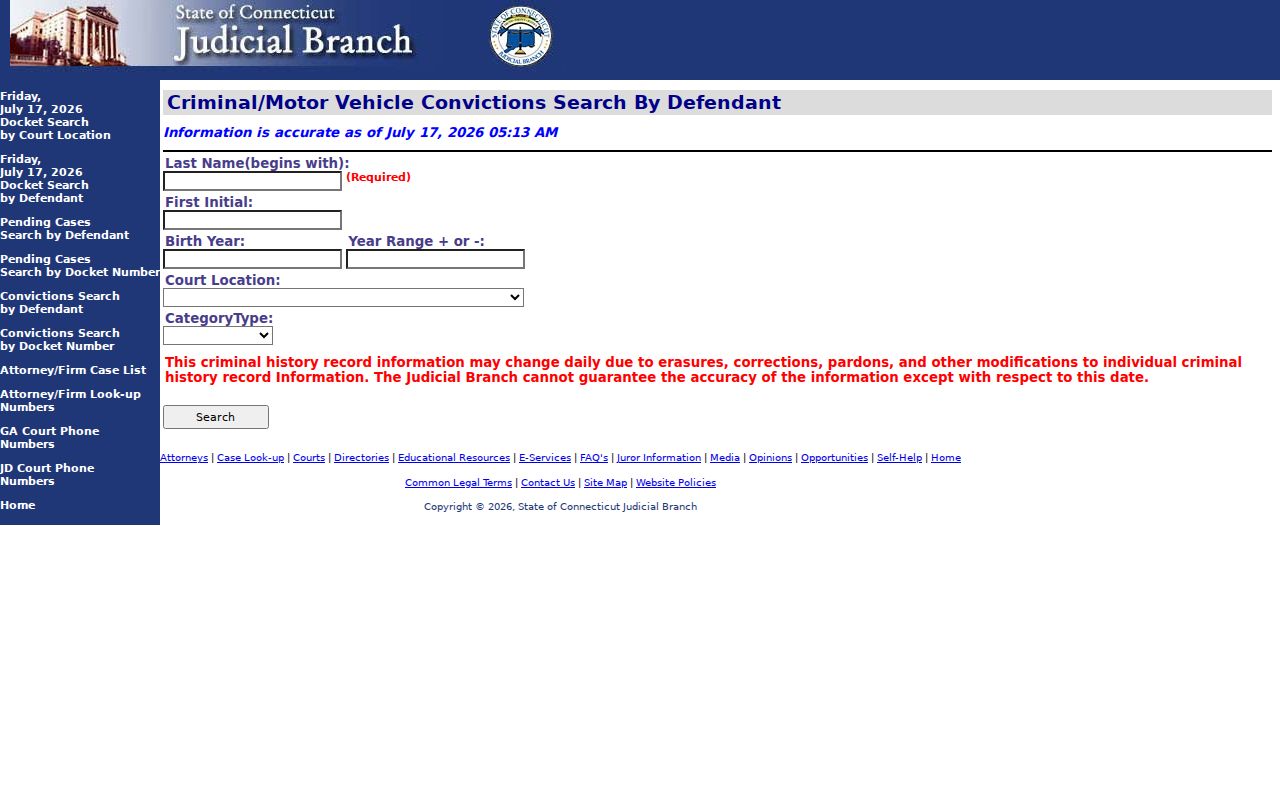
Its fields show why a surname alone is weak: birth year, category, and the two local court choices give a Middlesex County search far more precision.
The statewide criminal matters hub supplies the broader set of search routes shown here.
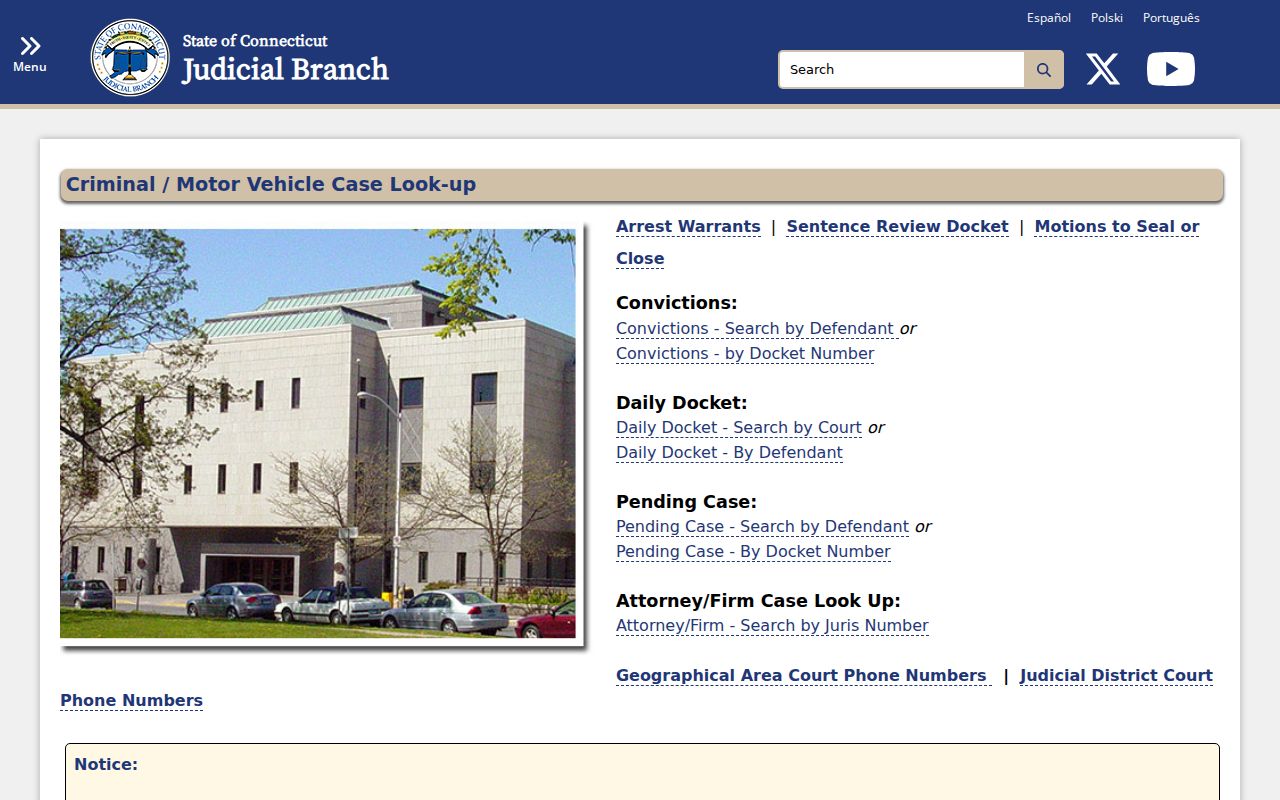
That menu also leads to docket-number, daily-docket, and attorney searches, each useful when a defendant-name search is too broad.
What a Middlesex Case File Shows
A public Middlesex County docket summarizes the court's work. Filed documents are not universally downloadable, so the online entry and clerk-held file should not be treated as identical products.
| Docket Number and Court | Location prefix, case type, year, unique number, and transfer or severance suffix. |
|---|---|
| Charging Record | Offense description, statute, class, and charges filed or later substituted by the prosecutor. |
| Docket Events | Appearances, hearings, motions, plea events, and next court date when public. |
| Bond | Amount and type tied to release conditions, not a sentence. |
| Disposition | The outcome of each count, such as conviction, dismissal, acquittal, or nolle. |
| Sentence | Custody, suspended time, probation, fines, and related public entries. |
A single docket can contain several counts with different outcomes. Read every count and its disposition date. “Nolle” means the prosecutor chose not to continue that charge. It is not a finding of guilt.
Middlesex Dockets Without Documents
The public lookup provides event and charge detail, but disclosable criminal documents are inspected or ordered through the clerk. Research identifies a current public-copy rate of $1 per page and permits a handheld scanner at the counter without a copy charge. Confirm the fee and certification cost before ordering because schedules can change.
For a disposed file transferred to centralized storage, contact the Superior Court Records Center at SuperiorCourtRecordsCenter@jud.ct.gov or 860-263-2750. Give the full docket number, court location, party name, and the exact item needed. This is more useful than asking for an undefined “complete history.”
Federal cases are separate. The official PACER portal is the court record source for a federal criminal docket.
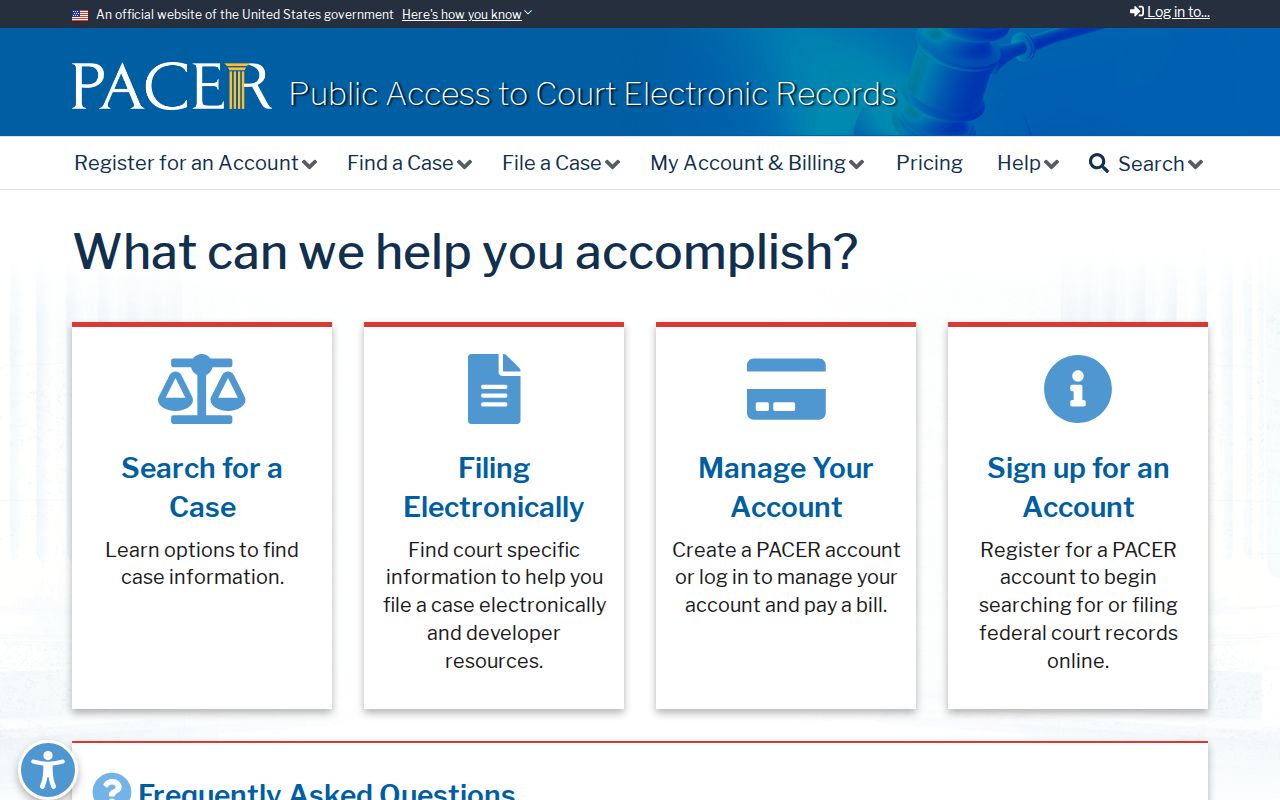
PACER requires registration and uses the current federal judiciary billing rules, while a state Middlesex prosecution stays in Connecticut's Judicial Branch system.
Stages of a Middlesex Criminal Case
A Middlesex County case often begins with an investigation and arrest, followed by prompt presentment and a release or bond decision. The prosecutor reviews the arrest counts and may file a substitute information, which is the formal charging document. Pleas, discovery, conferences, and motions follow. The case can end through a negotiated plea, trial, dismissal, acquittal, or nolle, with sentencing and appeal where applicable.
Case flow: Charges Filed › Arraignment › Pretrial › Plea or Trial › Disposition › Sentencing
Do not assume the first police charge will remain unchanged. The arresting officer records probable cause at one point in time; the prosecutor controls the filed case, and the court records the final result.
Middlesex Disposition Terms in Plain Words
Court terms can make a public docket look more conclusive than it is. A disposition is the result for one charge. An acquittal is a not-guilty result. A dismissal ends the count without conviction. A nolle prosequi records the prosecutor's choice not to continue. A conviction follows a guilty plea or verdict. Erasure is the statutory removal of qualifying records from ordinary public and legal effect.
- Arraignment
- The first formal plea proceeding.
- Information
- The prosecutor's charging document.
- Bond
- Conditions or security for release while a case is pending.
- Disposition
- The final outcome of a specific count.
- Sentence
- The consequence imposed after conviction.
Bond and sentence fields answer different questions. Bond concerns pretrial release. A sentence follows a conviction and may combine prison, suspended time, probation, fines, or restitution.
Why Erased Middlesex Cases Disappear
A qualifying Middlesex criminal case can vanish from ordinary public lookup after erasure. Acquittals, dismissals, a nolle that satisfies statutory conditions, and eligible Clean Slate convictions may fall under Connecticut General Statutes §54-142a. The absence is a legal access result, not evidence that the search portal failed.
A person checking their own record should obtain the official SPBI history and compare it with the court outcome. If a case that should be erased remains visible, save the result and provide the clerk and SPBI with the disposition or erasure order. Public requesters cannot demand confirmation of a record that the law treats as erased.
Middlesex Case Access and Restrictions
Connecticut court records are accessed under Judicial Branch rules, the Connecticut Practice Book, and confidentiality statutes. The ordinary search excludes erased, sealed, juvenile, youthful-offender, and otherwise confidential cases. Public pages also omit or mask sensitive identifiers, victim information, and protected material.
An absent result does not prove that no event occurred. Try pending and disposed modes, spelling variants, both local court values, and an exact docket search. Then ask the clerk whether the file is archived, restricted, or unavailable to the requester. A person reviewing their own history should compare the docket with an official SPBI record and provide the court disposition when correcting a verified mismatch.
Federal custody also remains separate from a state case. The official Federal Bureau of Prisons locator is shown below.
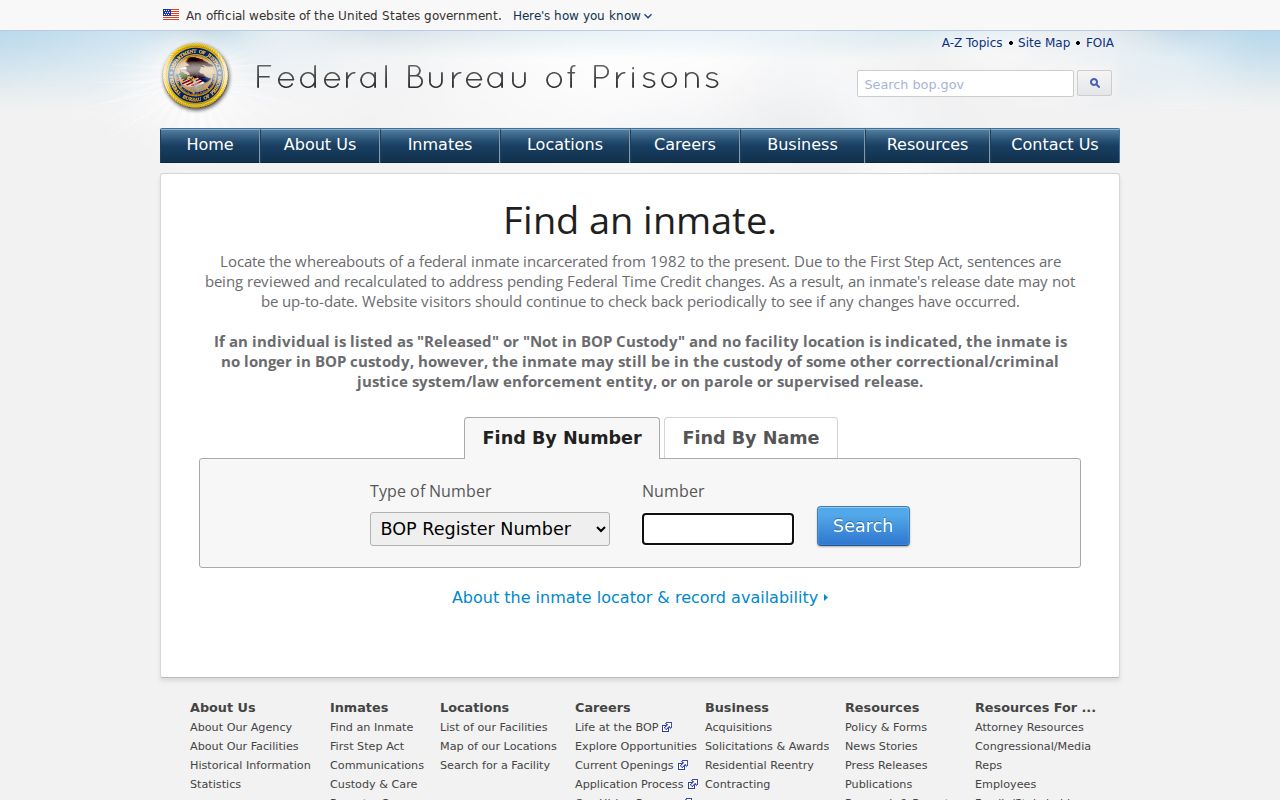
That search can help locate federal custody, but it does not replace the Connecticut court file or prove a state case outcome.